
Marion Court Docket Searches
No Marion municipal court docket exists in the official record system. Cases with a Marion connection are handled by the McDowell County General Court of Justice. That covers criminal, traffic, civil, and small claims matters. To start a Marion court records search, open eCourts Portal Smart Search. Set the location to McDowell. That filter matters. A statewide search by name or case number can pull results from many counties otherwise.
- Choose Smart Search and enter a case number or a party name in last-name, first-name order.
- Use McDowell location, case type, status, or filing-date filters when a Marion search is broad.
- Open the underlined case number to read the public Case Summary or Register of Actions.
- Use Search Hearings, not Smart Search alone, for a current Marion-related court date.
- Call the McDowell Clerk at (828) 655-4100 when Marion court records are missing, old, restricted, or unclear online.
Marion is the county seat, yet the court file itself belongs to the McDowell Clerk of Superior Court. A city address or a call to city police does not create a separate Marion judicial docket. State court records stay with the county clerk.
Marion Court Records Have No Municipal Portal
Marion has no municipal-court page of its own. The city runs no judge, docket calendar, case-number search, public hearing lookup, or court-records counter. That is simply how access works here. Anyone with a state case arising in Marion should go straight to the McDowell state court system. Do not wait for a city portal that does not exist. Traffic matters, infractions, misdemeanors, small claims, and lower-dollar civil cases go to McDowell District Court. Felonies and civil actions over $25,000 belong to McDowell Superior Court. Both divisions share one Clerk of Superior Court. They also share the same public eCourts Portal path for eligible files.
Inside the Marion Municipal Court
There is no Marion Municipal Court operating as a separate judicial body. The real answer for a Marion court-records search is the county-level state trial court. District Court takes most traffic cases, infractions, misdemeanors, small claims, and domestic matters. It also handles civil actions at or below $25,000. Superior Court handles felonies and civil actions above that line. This division explains a common puzzle. A Marion case can have a clear city connection. But its docket, court date, and official documents remain records of McDowell County's state courts. The Portal filter and the clerk-custody route both run through the McDowell court location, not the City of Marion.
Marion City Records Versus Court Records
Marion's City Clerk and Public Information Officer holds city-government records. These include City Council minutes and other city materials. To request one, the city form asks for a name or other identification. It also wants an email address and a description of the record. Requests are handled in the order received, and legal review can add time. Those details suit a city record, not a McDowell court file. The Marion City Clerk and Public Information page spells out the process. It lists contact details too.
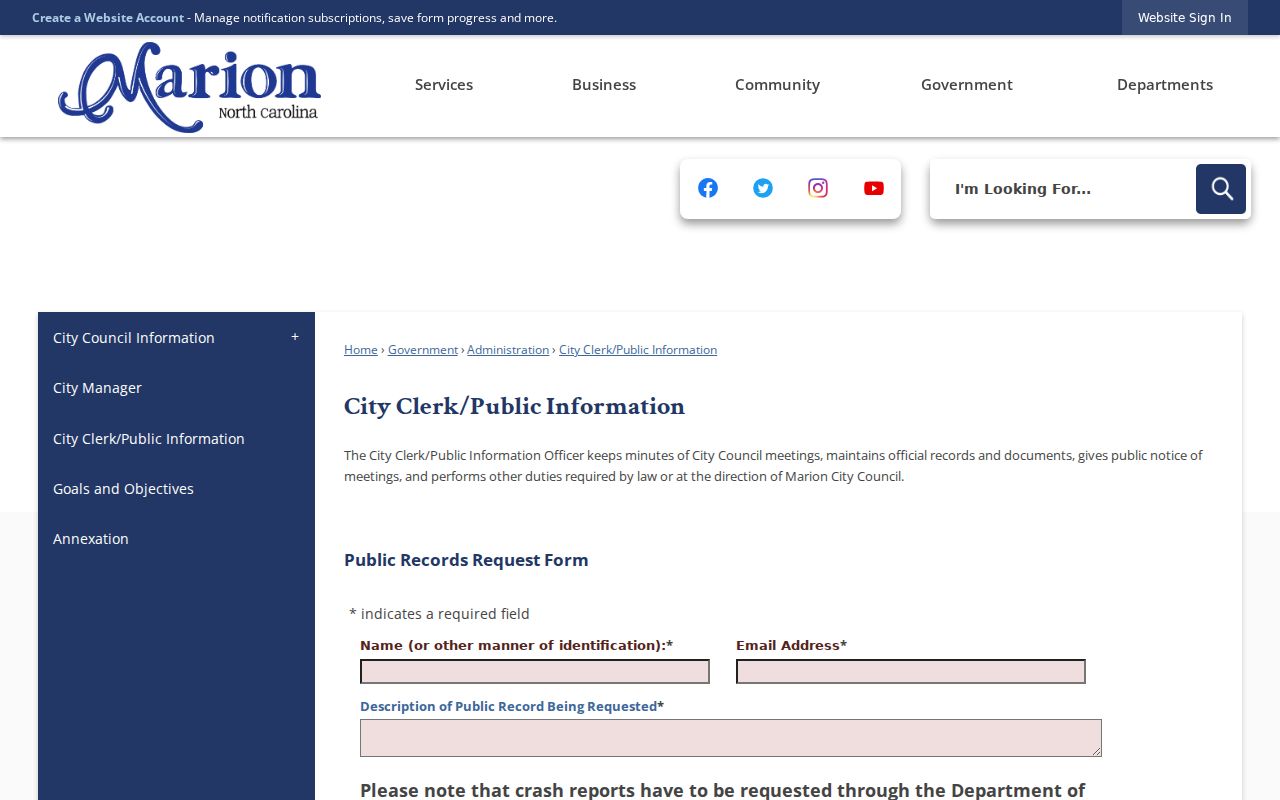
City meeting records and other municipal documents belong with the City Clerk. A Marion state court docket, filed paper, or certified copy belongs with the McDowell Clerk of Superior Court instead. Marion's City Hall Annex at 194 N. Main St. houses city planning and development, tax, utility collection, and related departments. Those offices handle city work, not the state court record system. So before sending any Marion request, figure out what it actually seeks: a city administrative document, a city citation payment, or a McDowell court file. Sorting that out first keeps the request with the office that can truly locate the record.
Finding Marion Court Dates
Marion court dates show up through eCourts Portal Search Hearings. Pick McDowell as the location first. The tool requires a location, a hearing type, a search type, and a date range. From there, a Marion case can be pulled up several ways. Depending on the search type chosen, you can use a case number, party name, business name, attorney, bar number, judicial officer, or courtroom.
| Date | The current hearing date returned for the Marion-related McDowell case. |
|---|---|
| Time | The listed hearing time or calendar start, which may not be the precise call order. |
| Location | The McDowell court location selected in the hearing search. |
| Hearing type | A required live selection whose available options depend on the search context. |
| Case history | The Case Summary event sequence used to compare a current setting with earlier Marion case events. |
Search Hearings never labels an entry as virtual or in person. If that detail matters, confirm the Marion setting with the court notice, the clerk, or the courtroom office before you head out.
Marion Court Records at the County Seat
Marion became McDowell's county seat in 1844. It was officially sanctioned as the City of Marion in 1845. Today the courthouse record route runs through 21 S. Main St. in Marion, and the Clerk of Superior Court there keeps county trial-court records. The clerk's main number is (828) 655-4100. Weekday hours run 8:30 a.m. to 5:00 p.m. The McDowell County Courthouse page posts those details and is the primary source for this location. When a Portal result does not answer the question, the clerk counter, the county paper file, and the public terminal are the alternatives.
Marion Traffic Ticket Lookups
A Marion traffic ticket starts in state court. Those cases belong to the McDowell District Court. The county Clerk of Superior Court holds the record. Portal Smart Search works by name, case number, or the documented citation-number search type when it is offered. Then use Search Hearings for the court date. The court file shows the citation or charge, along with events, dates, disposition, and court monetary information.
Marion also runs a city Citation Payments page. It explains that eligible city citation payments may be made at City Hall, 194 N. Main St., on weekdays from 9 a.m. to 5 p.m. except holidays. Visa and MasterCard are accepted in person. No court docket, case search, court calendar, or judicial disposition history appears on that page.
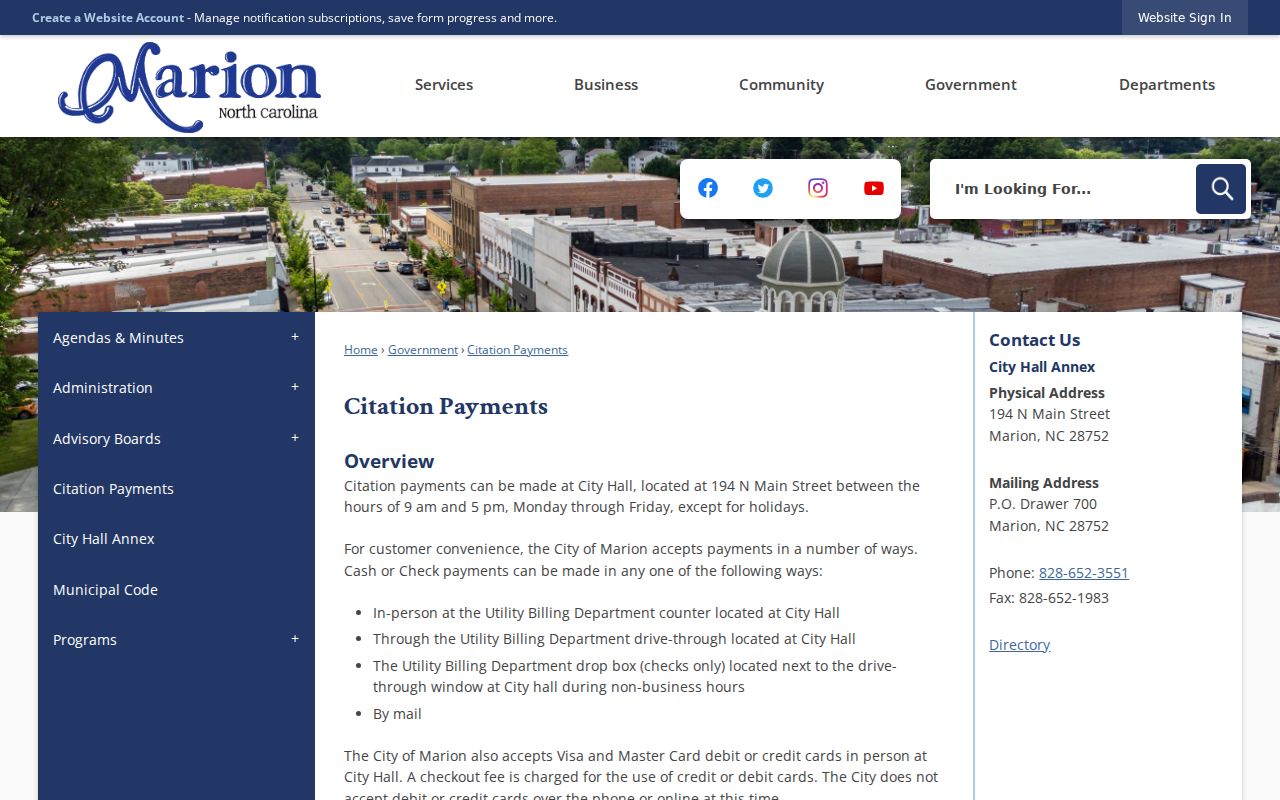
City Hall payments and court records are different things. The City Hall channel only settles eligible city citations. A citation that names a McDowell court date still belongs with Portal and the county clerk, so check it there.
Marion Court Records by City Scale
The 2020 Census incorporated-place table lists Marion's population as 7,717. That makes Marion the county's only city-scale incorporated profile. Population does not create a court, though. It only explains why Marion is the place name people most often type into a docket search, even though the state-court record route runs countywide.
City government and McDowell's state courts stay separate. City record requests go to the City Clerk. A Marion court record sits with the county Clerk of Superior Court. The case number and court location tell you which system owns the record.
How Marion Cases Reach the County
A Marion case does not need a municipal docket stop to reach the county courts. The state-court path is Marion-related traffic, infraction, misdemeanor, small claim, or lower-dollar civil matter → McDowell District Court → Clerk of Superior Court and eCourts Portal. Felony or major civil matter → McDowell Superior Court → the same unified clerk and Portal route.
Docket flow: Marion incident or filing › McDowell District Court or Superior Court › McDowell Clerk of Superior Court › eCourts Portal and official case file.
A District Court misdemeanor conviction can be appealed for a new trial in Superior Court. The Marion label may stick with the case. Even so, the later record stays in the McDowell county trial-court system.
Marion Court Record History
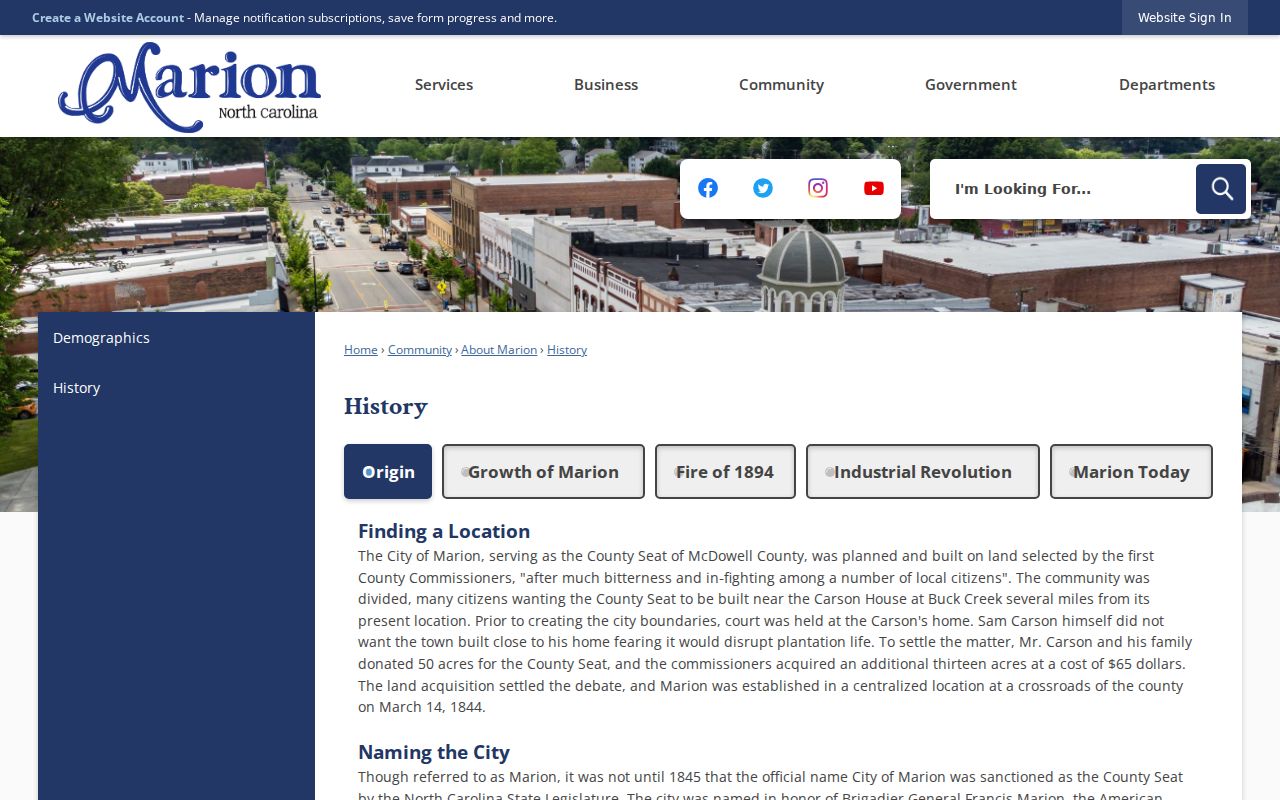
Old Marion records carry a real risk. The city's history says a fire on November 25, 1894 destroyed the original 1843–45 courthouse. Many original town documents burned too. That does not prove a specific Marion court case was lost. So ask the clerk or an archive first. Find out where surviving material is held, rather than trusting an online name search to be complete.
The official Marion history page tells the city's early story, fire included.
That paper-record caveat sits beside a much newer change. McDowell joined eCourts Portal in October 2025, so the clerk remains the key stop for older or uncertain Marion court records.
Who Can See Marion Court Records
Public Marion-related criminal, civil, estate, and nonconfidential special-proceeding records may be searchable through Portal. Under G.S. 7A-109, clerk-maintained files, dockets, and indexes are open to inspection during regular office hours unless another law blocks access. The online view is not the official record. Certified copies come from the McDowell clerk.
Access limits. Marion-related juvenile records are confidential under G.S. 7B-3000. Sealed or confidential records, unreturned warrants, protective-order and domestic-violence material, and protected identifiers are not ordinary public Portal records.
Portal masks birth month and day. No Social Security numbers appear in public results either. So read a Marion name-search hit, or a missing one, with those limits in mind, and verify with the court that keeps the record.
Marion Court Record Fallbacks
An empty Marion search is not the end. First check spelling, case-number format, McDowell location, type, status, and date range. A no-result message can mean a restricted record, legacy coverage, or a formatting problem. That message does not prove a Marion court record never existed.
Next, call the McDowell Clerk of Superior Court. Inspect the county file or the public terminal. Identify the exact document you need before you ask. NCAOC's administrative public-record form is no shortcut for a Marion case file. NCAOC does not hold county court documents.
For the wider workflow, use McDowell County Court Case Records. Keep in mind that Marion City Hall, the Marion City Clerk, and the McDowell Clerk each keep different records. Pin down the issuing office and the case number before making a request.